
Wakefield Bridge
A Howe-truss crossing in Quebec, rebuilt by volunteers after a fire. A case study in faithful reconstruction.
Read the article →Covered bridges were built across Canada from the mid-nineteenth century onward, their wooden trusses sheltered by roofs and siding. This reference looks at how they were framed, where they survive, and how communities maintain them today.
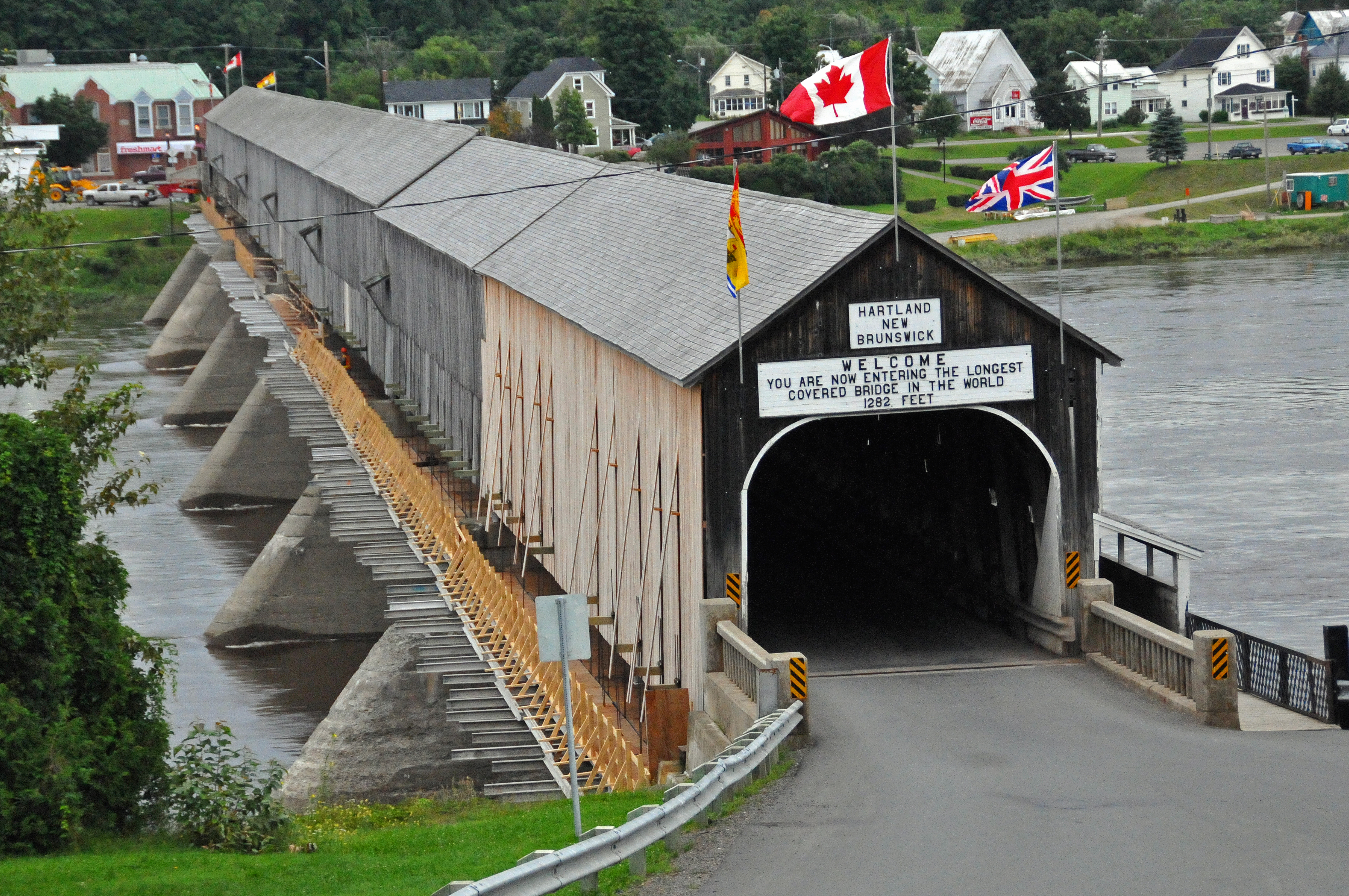
The covering protected the load-bearing timber truss from rain and snow. An exposed wooden deck and chords could rot within a decade or two; a sheltered frame could last generations. The walls and roof you see are sacrificial cladding, replaced over time, while the truss inside carries the traffic.
Roof and siding keep the chords and diagonals dry, slowing the decay that ends exposed wooden spans. Cladding is renewed; the frame endures.
Builders used spruce, pine and hemlock cut near the crossing. Spans were sized to the river and to the longest sound timbers available.
Most surviving Canadian examples use the Town lattice, Howe or Long truss. Each distributes load through a different arrangement of timber and iron.
A Howe-truss crossing in Quebec, rebuilt by volunteers after a fire. A case study in faithful reconstruction.
Read the article →
The longest covered bridge in the world, in New Brunswick. How a multi-span Howe truss was framed and later sheltered.
Read the article →
Town lattice, Howe and Long trusses compared, with the Ontario and Quebec spans that still use them.
Read the article →Surviving spans are concentrated in a few provinces, shaped by river systems, forestry and local heritage protection.
If you have a reference, a photograph credit, or a correction about a span listed here, send a note. This form runs in your browser for demonstration and does not transmit data.